


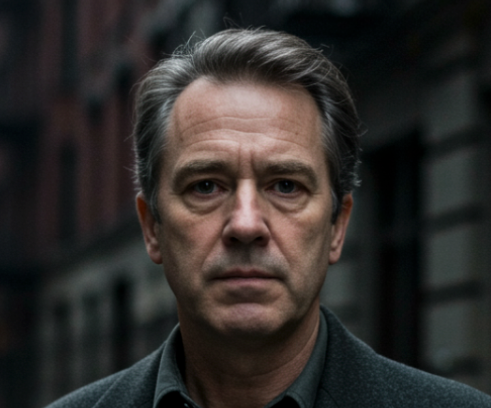
In Loving Memory of Dennis Harper (1934 – 2025)
“A life of integrity, laughter, and love leaves a legacy that time cannot erase.”
Early Life in New York City (1934 – 1952)
Dennis Michael Harper was born on May 4, 1934, in the heart of New York City, during a time when the world was finding its footing after the Great Depression. The city was restless yet full of possibility — a place where dreams were born on the sidewalks and built in the skyscrapers above them. Dennis came into that world as the second of three children to Samuel and Lillian Harper, a working-class couple who lived in a small apartment in Queens.
His father worked long hours as a postal clerk, and his mother was a teacher who filled their home with the sound of piano keys and the smell of fresh bread on Sundays. From them, Dennis learned two lessons that would define his life: that hard work was sacred, and that kindness was a form of wisdom.
Even as a child, Dennis had a spark — not loud or attention-seeking, but quietly determined. He would sit for hours building things from scraps of wood and discarded metal his father brought home from the post office workshop. When other children played stickball, Dennis could be found drawing blueprints of imaginary machines, fascinated by how things worked.
At PS 139, his teachers noted his sharp mind and steady demeanor. “He has an engineer’s curiosity,” one wrote on his report card. “And the heart of a gentleman.” That combination — intellect and empathy — became the foundation of everything he would become.
Education and Early Ambition (1952 – 1960)
After graduating from Stuyvesant High School in 1952, Dennis earned a scholarship to Columbia University, where he studied mechanical engineering. Those were defining years — the 1950s were an era of invention and post-war optimism, and Dennis found himself captivated by the possibilities of technology and innovation.
He often said later in life that Columbia wasn’t just where he learned engineering; it was where he learned perspective. “Machines don’t change the world,” he once told a class of interns decades later. “People who believe in something do.”
During his senior year, he met Margaret “Maggie” Thompson, a literature major from Boston who worked part-time in the campus library. She was bright, warm, and quick to laugh — and Dennis, who was usually shy, found himself returning books he hadn’t read just for the excuse to talk to her again. They began walking together through Riverside Park, and soon everyone knew they were inseparable.
In 1956, after graduation, Dennis joined General Electric as a junior engineer. Maggie and Dennis were married two years later, in June 1958, in a small ceremony at St. Patrick’s Cathedral, with family from both coasts attending. Their honeymoon was a week in Cape Cod — humble, happy, and unforgettable.
A Career Built on Integrity (1960 – 1990)
Dennis’s career spanned four decades, beginning in an era when slide rules were still in use and ending when computers reshaped everything. He started at General Electric in Schenectady, working on early turbine design. His diligence and creativity caught attention quickly. By the late 1960s, he was leading a team of engineers responsible for improving the efficiency of industrial turbines — work that would later influence energy systems worldwide.
But what truly distinguished Dennis wasn’t his technical brilliance; it was his humanity. He never saw success as an individual achievement. He believed every blueprint represented the effort of many hands and minds. When a project succeeded, Dennis made sure the team received credit. When it failed, he took the blame.
Colleagues described him as “a leader who never raised his voice but always raised morale.” He had a quiet charisma — a calm that steadied others even under immense pressure. He valued mentorship, spending countless hours with younger engineers, guiding them not only on technical matters but on the ethics of their work. “Do it right,” he would say. “Even when no one’s watching.”
By the 1980s, Dennis had risen to a senior leadership position within GE’s energy division, overseeing major developments in sustainable power systems long before the world spoke of “green technology.” His foresight earned him respect from peers and recognition from the industry. Yet he remained modest. When he received a professional achievement award in 1986, he accepted it by saying, “Innovation is a privilege — but using it responsibly is an obligation.”
Family: The Heart of His World
While his professional accomplishments were vast, Dennis’s true pride was his family. He and Maggie built a life together grounded in love, humor, and mutual respect. They welcomed three children — Jonathan, Emily, and Robert— each of whom would grow to embody different aspects of their father’s character.
At home in Westchester County, Dennis was the kind of father who showed up — at baseball games, piano recitals, and science fairs. He never missed a moment that mattered. Even when his career required long hours, he would come home and listen — really listen — to his children’s stories.
Jonathan recalls the smell of sawdust from the garage workshop, where Dennis spent weekends building furniture by hand. “He taught me how to sand wood patiently,” Jonathan said, “but what he was really teaching was patience itself.”
Emily remembers her father’s unwavering encouragement when she wanted to study art instead of engineering. “He never once told me to be practical,” she said. “He told me to be passionate.”
Robert, the youngest, remembers long walks with his father, during which Dennis would explain constellations, history, and why it was important to say thank you. “He didn’t lecture,” Robert said. “He guided. He made you want to be better.”
As the years passed, Dennis became a grandfather to six — Sophie, Jack, Liam, Nora, Ava, and Ethan — and his joy multiplied. The grandchildren adored him. To them, he wasn’t an engineer or an executive; he was simply “Papa Denny” — the man who made pancakes shaped like animals and told stories about growing up in “the city that never sleeps.”
Holidays were sacred to Dennis. Thanksgiving dinners stretched late into the evening, filled with laughter, music, and his favorite phrase: “Family first, always.”
Later Years: Reflection and Renewal (1990 – 2015)
After retiring in 1991, Dennis and Maggie spent their days traveling and rediscovering life’s simple pleasures. They took cross-country road trips, tracing the highways Dennis had once dreamed of as a boy. They hiked through the Grand Canyon, strolled the streets of Paris, and even rode a gondola in Venice, where Maggie teased him for pretending to row.
But Dennis wasn’t one to slow down. He became deeply involved in community service and mentorship programs, particularly those encouraging young people to pursue careers in science and engineering. He volunteered at local schools, guest-lectured at universities, and served on the board of a nonprofit organization focused on renewable energy education.
In the early 2000s, Dennis and Maggie relocated to Charlottesville, Virginia, to be closer to their grandchildren. There, Dennis cultivated his garden — rows of tomatoes, roses, and sunflowers that he tended with the same precision he once gave to turbine schematics. Neighbors remember him as the man who waved from his porch every morning and offered fresh vegetables to anyone passing by.
His curiosity never dimmed. Even in his eighties, Dennis was fascinated by new technologies — smartphones, electric cars, and artificial intelligence. “The world keeps learning,” he once said with a grin. “So should we.”
Tragedy came gently, in time’s quiet way. In 2017, Maggie passed away after nearly sixty years of marriage. Dennis was heartbroken, but he faced his grief with grace. “She was the melody of my life,” he told a friend. “Now I just hum along to remember it.”
He continued to live independently, surrounded by the love of his children and grandchildren. He filled his days with reading, journaling, and long walks in the park near his home. His family often joked that he had “out-engineered aging,” moving slower but never losing the spark in his eyes.
Final Years and Peaceful Passing (2016 – 2025)
In his final years, Dennis’s health began to decline gradually, as is nature’s way. He faced it with his signature humor and courage. “I’ve been debugging this old body for decades,” he told his doctor once. “Guess the warranty’s finally up.”
He remained sharp of mind and generous of spirit until the end. He continued writing letters — real handwritten letters — to his grandchildren, filled with life advice, funny observations, and gentle encouragement. His final note to them, written just weeks before his passing, ended with:
“Remember, love outlasts everything. Do good, stay curious, and keep laughing.”
Dennis passed away peacefully in his sleep on October 21, 2025, at the age of 91, surrounded by family in his Charlottesville home. The room was quiet, the autumn sunlight spilling through the window — just as he had always loved.
He is survived by his three children — Jonathan Harper, Emily Harper Bennett, and Robert Harper — and his six grandchildren, who carry forward his humor, kindness, and insatiable curiosity.
His ashes were interred beside his beloved Maggie at Greenwood Memorial Gardens, beneath an oak tree they once visited together.
The Man Behind the Achievements
To the world, Dennis Harper was an engineer, an innovator, and a mentor. But to those who knew him best, he was so much more — a listener, a teacher, and a man who saw beauty in the ordinary.
He loved jazz, particularly Miles Davis, and could often be found humming “So What” while making coffee. He was known for wearing suspenders well into his eighties and insisting that every day deserved a good breakfast.
He collected pocket watches, each one symbolizing what he called “time well spent.” He loved Sunday crosswords, slow walks after rain, and the way his wife’s laughter echoed through the house.
Friends recall how he remembered small details — birthdays, favorite books, the names of people’s pets. “He noticed things most of us overlook,” said his longtime friend and colleague, Richard Klein. “That’s what made him a great engineer — and an even greater human being.”
Reflections from His Family
Jonathan Harper (Son):
“Dad taught me that success isn’t about titles or money. It’s about how you treat people when you think no one’s watching. He showed me how to fix things — cars, broken fences, even broken hearts. I miss him deeply, but I carry his lessons with me every day.”
Emily Bennett (Daughter):
“He had this calmness that made everything seem possible. Even in chaos, he’d find a way to say, ‘Let’s think it through.’ My art, my patience, my optimism — all of that comes from him.”
Robert Harper (Son):
“He used to say that the measure of a life isn’t in years, but in laughter. Ninety-one years of laughter — I think he measured up pretty well.”
Sophie Harper (Granddaughter, age 24):
“He called me ‘Sunbeam.’ Every time I felt lost, he’d remind me that light always finds its way. I believe that’s what he did for all of us — he helped us find our light.”
Legacy
Dennis Harper’s influence extended far beyond his career. His work in early sustainable energy design continues to inspire engineers and researchers worldwide. His mentorship lives on through the students he guided, many of whom still quote his favorite phrase: “Better is always possible.”
Yet his truest legacy lies not in inventions or accolades, but in relationships — the love he nurtured, the people he inspired, and the laughter he left behind.
His family established The Dennis M. Harper Foundation for Innovation and Integrity, a scholarship fund supporting underprivileged students pursuing careers in science, technology, and environmental engineering. It stands as a living testament to the man who believed that every great idea begins with curiosity and compassion.